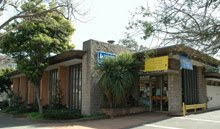
Hormel Gay and Lesbian Center

Monday, November 16, 2009

Change and American Family Law

The absence of laws regarding non-traditional couples and families has proved to be both a conundrum for judges and the source of much courtroom confusion. At times, the existence of this vast gray area, can lead to tragedy as in the case of Lisa Pond, Janice Langhbehn and their children. On a vacation to Florida, Pond sufferered an aneurysm. Her partner of 18 years and the children they raised together were denied access to her bedside as she lay dying. A hospital social worker told Langbehn point blank, as she denied her request, that the family were now in "an antigay city and state." By the time Langbehn and her daughter gained admission to her room Lisa Pond had lost consciousness. This past September Langbehn's lawsuit was dismissed by federal court.

The case of Sharon Reed and Jo Ann Ritchie was quite similar. Reed was barred from her partner, Ritchie's intensive care unit for extended periods of time preceding Ritchie's death. The two women had been together for 17 years.

To help explain, clarify and prevent these incidents from ocurring in the future Kimberly D. Richman has written, Courting Change: Queer Parents, Judges, and the Transformation of American Family Law. Her goal is to shed light on the "indeterminate and discretionary area of American Law," that encompasses issues surrounding partnership, parenting, child custody and visitation rights, to name but a few. Her book provides insight into the rationale behind court decisions and ways the law can be re-interpreted and changed to better meet the needs of the diverse families of the 21st century.

Thursday, November 12, 2009

Queer Punk Panel Discussion

Queer Punk Panel Discussion
Tuesday, Nov. 17th, 7 p.m.
at the Eureka Valley/Harvey Milk Memorial Branch Library

The panel will discuss how being Queer influenced their music and will share memories of playing the San Francisco punk scene in the 80s and 90s. Panelists include KD Davis, bass player for Wilma and Impulse F, Debbie Hopkins, drummer for the Contractions and Jon Ginoli, founder of Pansy Division!

This program is part of PUNK PASSAGE:
San Francisco First Wave Punk
The Photography Of Ruby Ray at the Jewett Gallery, Main Library

Tuesday, November 3, 2009

The Real Cost of "Don't Ask Don't Tell"

Lt. Daniel Choi was discharged as an Arabic translator in the New York National Guard, after he came out as gay on the Rachel Maddow Show. In that interview Mr. Choi said, "By saying three words to you today, I am gay, I am in violation of title 10 of the U.S. code." Sandy Tsao, a lesbian, was also discharged that week for uttering the very same three words.

In his book, Unfriendly Fire: How the Gay Ban Undermines the Military and Weakens America, Nathaniel Frank provides a historical overview of the relationship LGBT folks have had to the U.S. Armed Forces since World War II. He debunks the notion that the inclusion of gay troops would interfere with necessary bonding. Frank categorically states, "There has never been any empirical evidence that openly gay service undermines unit cohesion." His work is a meticulously researched and compelling analysis of both the human and strategic costs of this piece of legislation.

Monday, October 26, 2009

Eureka Valley/Harvey Milk Branch Opening Celebration!

Opening Day at the Eureka Valley/Harvey Milk Memorial Branch Library
by photographer J. Doiy


Monday, October 19, 2009

Unspeakable and Illegal

In many of the countries of the Middle East to be openly gay, lesbian, bisexual or transgendered is to risk life and limb, and in some countries even the death penalty. But learning to navigate turbulent waters has always been a survival skill of LGBT folks, and Brian Whitaker, a scholar and a journalist, chronicles some of these strategies in his book, Unspeakable Love: Gay and Lesbian Life in the Middle East. Although he tends to underestimate the role that sexism plays in these cultures, his insight into religious and secular bias is well worth the journey.

For more of an anecdotal and personal approach, check out Illegal Citizens: Queer Lives in the Muslim World by Somali writer and film-maker, Afdhere Jama. The style here is more informal consisting of individual interviews laced with commentary that includes more voices of women and transgendered folks forging an every day path of resistance in spite of many obstacles.

Alone or in combination these books provide an opening glance into the lives of LGBT Muslims and other Middle Eastern members of our community.

Thursday, October 15, 2009

B/GLAM: A "Family" Reunion Read/A Re-gathering of Tribe


Celebrate the coming-back-together of the Bay Area's best Black Gay literary voices. This "Family" reunion reading is an opportunity for this collective of community based writers to report back in on their comings and goings, their ups and downs and their short falls and ultimately their triumphs. This reading brings to the table and ultimately to the mic all of the stories that these writers have gone out and gathered. Join founders Cedric Brown and Marvin K. White as they read with Ramekon O'Arwisters, Byron Mason, Antoine Crowder, Louie Butler, Dazie Grego, Stewart Shaw, Derek Lassiter, Jair Trice, Juba Kalamka, Thandiwe Thomas De Shazor, Robert Quintana Hopkins, James Knox and Alan Miller. Historical and hysterical are the main ingredients for this reading! Tuesday, October 20th at 6:00 PM. San Francisco Public Library Koret Auditorium (Lower Level). 100 Larkin Street. Free.

Tuesday, October 13, 2009

Homegrown Poetry

Yesterday we had a day off for Columbus Day, which commemorates the anniversary of an event that some consider the beginning and others the end of "civilization" as we know it. Columbus and his crew called the people they "discovered" Indians because of their mistaken belief that they had landed in India. In Berkeley California the holiday is known as Indigenous People's Day and is celebrated as such.

Joy Harjo is a descendent of these first inhabitants and an enrolled member of the Muscogee (Creek) Nation. She is also a musician, a lesbian and a poet extraordinaire. This collection, How We Became Human, represents her best work from 1975-2001. Her words weave a picture of the amazing, magnificence of the natural world, reminiscent of Mary Oliver, interspersed with a lens on the edgy, urban struggle for survival a la June Jordan. These poems serve as mantras that help us to "become human" and appreciate our world in all its fierce and fickle beauty.